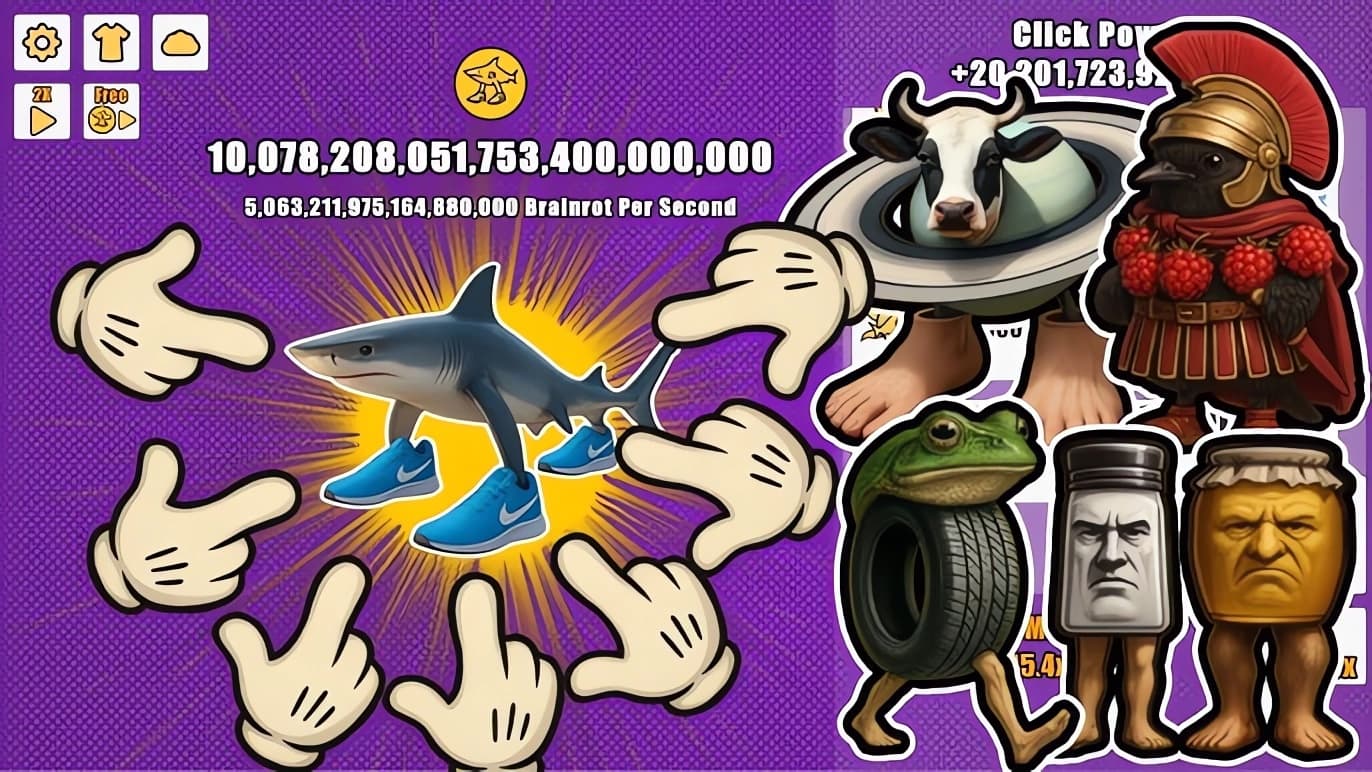
They’re simple, often absurd, yet millions of people can’t keep their fingers away from them. Clicker games—also known as idle games or incremental games—represent one of the most fascinating phenomena in modern gaming. But what makes these seemingly simple games so incredibly captivating? Why do we spend hours tapping screens just to watch numbers grow, and why are games like the viral hit “Italian Brainrot Clicker” suddenly everywhere?
Contents
What Are Clicker Games Anyway?
Before diving into the psychology, let’s establish the basics. Clicker games operate on a deceptively simple principle: you start with a single click that generates a small reward—virtual currency, points, or progress. You then invest these rewards in upgrades that boost your clicking efficiency or automate the process, allowing you to earn income even when not actively playing (hence “idle games”). The goal? Ever-larger numbers, increasingly absurd upgrades, and the satisfying feeling of exponential growth.
The themes and presentations are incredibly diverse, ranging from cookie bakeries to managing entire galaxies, and games that capitalize on current internet memes. Imagine a website like Italian Brainrot Clicker dedicated entirely to such a specific trend—the possibilities seem endless. This variety, combined with accessible gameplay mechanics, contributes significantly to their popularity.
The Psychology Behind the Click: Why These Games Captivate Us
The success of clicker games isn’t accidental—it’s deeply rooted in human psychology and cleverly taps into some of our most fundamental needs and behavioral patterns.
Instant Gratification and Constant Progress
One primary reason for their addictive nature is the constant feedback and immediate rewards. Every click, every upgrade produces a visible result. Our brains love this! They release dopamine, a feel-good hormone that motivates us to continue. This sense of achievement, even if only within the game, is immensely satisfying, often requiring minimal mental effort.
Perfect for Multitasking: The Ideal Gap-Filler
In our fast-paced world where multitasking is the norm, clicker games fit perfectly. They rarely demand our full attention. You can easily play them while watching a series, listening to music, waiting for the bus, or even (admittedly) during boring online meetings. They’re the ideal “second screen” games. Major German gaming portals like GameStar.de regularly report on such casual gaming trends and how they shape many players’ daily routines.
Relaxation and Stress Relief
However paradoxical it may sound, the often monotonous clicking activity can be incredibly relaxing. It’s a kind of meditative routine that can help disconnect from stressful daily life. You don’t need to think much—just go with the flow and watch your little empire grow. For many, this provides a welcome escape.
The Rise of Meme-Based Clickers: “Italian Brainrot Clicker” as a Phenomenon
While clicker games aren’t new, they’re constantly evolving. A fascinating recent trend is the integration of the current internet and meme culture. Games like “Italian Brainrot Clicker” are perfect examples, incorporating viral TikTok sounds, absurd characters, and the chaotic humor of “brainrot” memes into interactive experiences.
These games benefit enormously from recognition value and the existing fan base of the memes. It’s simply fun to rediscover familiar characters and sounds in a playful context. The simple nature of clicker games makes them perfect for quickly implementing such trends. You don’t need complex storylines or elaborate 3D graphics to capture and gamify the essence of a meme.
The Evolution Continues: What Defines Modern Clicker Games?
Although the core mechanics often remain simple, modern clicker games are far from mindless tapping. Many titles offer surprising depth and strategic elements.
More Than Just Clicking: Depth and Strategy
Many current idle games feature complex upgrade paths, various resources, unlockable new gameplay mechanics, or “prestige” systems. In the latter, you deliberately reset your progress to gain permanent bonuses that accelerate future playthroughs and open new strategic possibilities. Some titles even integrate light story elements or RPG influences to maintain long-term motivation.
Social Aspects and Community
While clicker games are often perceived as solo experiences, social components exist here too. Leaderboards where you compete with friends or players worldwide are common. Less frequent but present are guilds or cooperative elements. Exchanging strategies and progress in forums or platforms like Reddit (such as the international subreddit r/incremental_games) is also an important part of the culture surrounding these games. For current gaming trends and reviews, many German players visit portals like ComputerBild.de/Spiele, which occasionally covers such phenomena.
Conclusion
The popularity of clicker games in 2025 can be attributed to a combination of psychological tricks, adaptation to modern lifestyle habits, and clever integration of current trends like meme culture. They offer quick success experiences, are easily accessible, serve as relaxing gap-fillers, and—as in the case of “Italian Brainrot Clicker”—can be delightfully silly and entertaining.
Whether this trend will last forever remains to be seen. But one thing is certain: the simple appeal of clicking and steady growth will likely continue to captivate us in the future. Happy clicking!